Sunday, January 18, 2015

Assumptions

Economics, and other sciences I suppose, hang certain theories on assumptions.  For example, we might assume that we want to increase the purchasing power of individuals because we assume that they'll use that power to increase their well-being.

Sometimes these theories are debatable and worth analyzing.  For example, we assume that enriching people is better than making them poor, but are people in poor countries necessarily less happy than people in rich countries?

 When it comes time to make decisions, we may need to ask ourselves what assumptions we are making when we make our decisions.  When I make spiritual decisions, I am assuming that God knows what is best for me and for everybody that is affected by my decisions.  And based on the assumption that the Book of Mormon is true, the Prophet Joseph Smith and his successors are inspired by God and I should strive to follow their counsel.  With all of my heart I believe that these are correct assumptions, and I am yet to regret making a decision that was based upon these assumptions.

Sunday, January 11, 2015

Diminishing Marginal Returns

In economics we talk about something called diminishing marginal returns.  This means that each additional unit that a company produces becomes more difficult to produce.  For example, getting the first apple out of an apple tree is really easy, but getting the 100th apple is more difficult because you have to climb to the top of the tree and really search for it.
apples-934663


So it is with our efforts to share the gospel.  Perhaps that's why it seems that people who are recently baptized or who are just starting to go to church often find lots of friends with whom they can share the gospel.  It seems more difficult for members who have been trying to share the happy gospel message with their friends for many years.


Fortunately, there exist 'economies of scale'.  An example of this is a computer chip.  As more and more are produced, each one becomes cheaper because the company is learning to produce them cheaper and better with better technology.  In a similar way, we may learn new skills by praying and seeking to know and talking with others about how to share the gospel in our current circumstances.


Sunday, January 4, 2015

Freedom

Leonard E. Read is an economist that discusses how we need "faith in a free people" to believe that we can produce what we need without government planning everything in the economy.  He gives pencils as an example: no single person knows how to create every part of a pencil, and yet we get them for 10 cents through a market with free people.
colored-pencils-761328

We also need faith to produce peace in our lives and salvation in the next life.


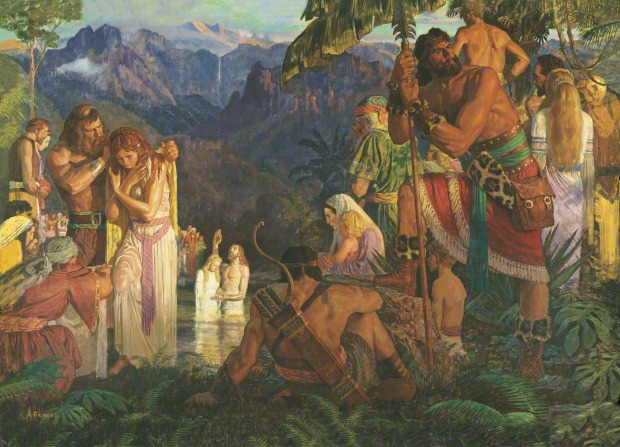
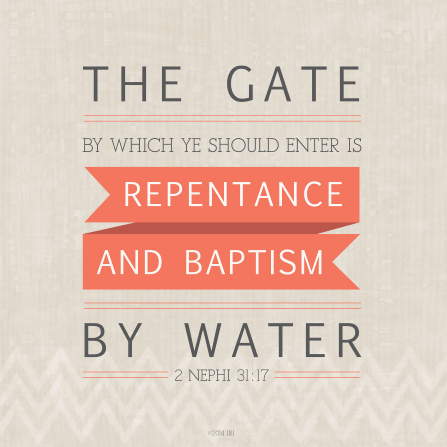
For example, the wood in a pencil is produced by a company that doesn't know how to make erasers.  Similarly, I may not know exactly how being immersed in water (baptism) can open the door to heaven.  And yet I do understand that the Spirit is felt during the baptismal ordinance.  I also know that looking at the life of a person who has tried to faithfully keep their baptismal covenant is a fruitful life.  So although I don't understand every part of the process, I know that the results produced are good.

While wondering if he knew enough to serve a mission, Elder Neil L. Anderson had the thought: "You don't know everything, but you know enough!"  Sometimes all we need is a "desire to believe" (Alma 32) and that works together with what the Savior has done for us in order to produce good works.

Alma 32:26-28
Elder Neil L. Anderson

Friday, January 2, 2015

The Book of Mormon

The Book of Mormon is another testament of Jesus Christ.  It helps me to understand how God "loveth his children" (1 Nephi 11:17) by looking at how God interacted with the ancient peoples of the Americas. "I am the God of the whole earth, slain for the sins of the world" 3 Ne. 11:14  I love the Book of Mormon and believe that it was inspired of God.

There are so many beautiful passages in the Book of Mormon, passages that bring me peace and the Spirit when I pray about them, and passages that support teachings in the Bible so well.  I have sometimes thought that even if a committee of fifty super smart philosophers got together, they wouldn't be able to come up with such a book.

President Ezra Taft Benson taught: "If the Book of Mormon be true—and millions have now testified that they have the witness of the Spirit that it is indeed true—then one must accept the claims of the Restoration and all that accompanies it" (Preach My Gospel).


My favorite philosopher, Adam Smith, said in The Theory of Moral Sentiments, "[Religion] alone can tell them, that it is of little importance what man may think of their conduct, while the all-seeing Judge of the world approves of it."  I believe that Joseph Smith was upheld in his testimony of the Book of Mormon by God's power.
joseph-smith-liberty-jail-swindle-268545


This is my not perfect testimony of the Book of Mormon that I cling to because of the special blessings it has brought me.  Although I've heard that clinging is something that emotionally unstable people do, so let me know if you have any counsel for me ; )


For related information see: Elder Holland's testimonyAlma 34:14-162 Nephi 31:20Moroni 7:33