Monday, August 31, 2015

Do the means matter more than the end?

Sometimes the means (or methods) matter and sometimes not. In economics, we see that elasticity of demand (how willing people are to give up buying something) is almost never zero. That means that when the price of a product goes up, people almost always reduce how much they purchase. The reduction in the amount purchased happens as they substitute; they replace that product with something else. In that sense people have some goal (a healthy diet, vacation, etc.) but they don't see one particular product as completely necessary to achieving that goal; they're willing to buy something that comes at a lower price.
One situation that involves substitution is when your family has the goal of doing wholesome recreational activities to maintain healthy relationships. So say you really like hiking in the mountains while your family lives in Utah. If your family moves to Miami then hiking in the mountains becomes excessively costly; it takes too much time to get to any mountains. The time, love for each other, and desire to be together continues and the mountains weren't ever really the important part of the recreational activity, as awesome as mountains are.

Another example of substituting one method for another is with sharing the gospel; time and resources can be used in an organizationally focused way, or more individually with small acts of kindness. A faith promoting website has the cost of lacking a personal feeling, whereas sitting down to chat with a friend costs more time per person. Both ways of using our limited resources have benefits, and I think it's worth it to strive for the most productive balance.

Of course, we don't want to go crazy with means that are inherently wrong, or when the cost of using those means exceeds the benefit.
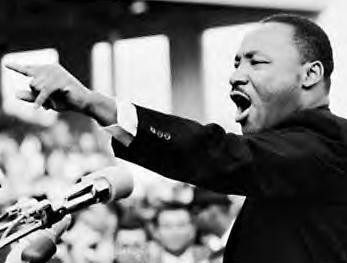
Martin Luther King Jr. said: "We will never have peace in the world until men everywhere recognize that ends are not cut off from the means, because the means represent the idea in the making, and the end in process, and ultimately you cannot reach good ends through evil means, because the means represent the seed and the end represents the tree."1

Substituting is something that we do when it allows us to achieve our goals in a less costly way. So I suppose that within our standards, substituting is wise : )

1  MLK, "A Christmas Sermon on Peace". You can also look at an interesting explanation of good fruit implying a good seed in Alma 32:28-36 from the Book of Mormon or Matthew 7:15-20. 

Tuesday, August 25, 2015

Why cut funding to public schools?

I sometimes hear people who are generally in favor of smaller government express that they would like to see more funding go to k-12 schools, or lamenting the occasional loss of funding. I think "what if we reduce funding to 0?" But if that seems too radical, then you could imagine that we are just talking about cutting funding by 10%.


The logic behind increasing funding to public schools is probably that education is good, and so we should be willing to spend a lot of resources on it. I completely agree! However, do good teachers or a desire for education disappear when less tax money is spent on education? Not necessarily; the resources still exist, and can be accessed and nurtured by people outside of the government sphere.

Take housing, for example. Say that the government had been building houses for everybody, and then it stopped. Do people stop having houses? Of course not; people start building houses themselves, and they are probably built more efficiently and uniquely fit to our individual needs.

Evidence that there is not a link between public spending on education and test scores could have to do with the fact that people substitute; those resources are freed up to do other good things, possibly things that help test scores as much as public spending would.

Just to better understand, I will give some examples of how the use of resources could change if public school funding is reduced.
1) People retain those tax dollars and spend them on getting private education for their kids, which could be in the form of more piano lessons, math tutors, etc.
2) People decide that more education isn't what their family most needs and buy higher quality food or more vacations with their retained tax dollars.
3) People are irresponsible and spend their additional money on drugs or alcohol.
4)...

If we think option 3 or some other negative option is most likely, then perhaps we don't want to cut taxes. The important point is that we get more of something when we give less to public schools.1

The best way to use our resources will change, and the decisions that normal consumers make help us to reach the most efficient use of resources.

Cutting public spending will give way to the private market, which would allow the most effective ways of educating people to thrive and the less effective ways to die.
Now I know that a lot of people disagree with this, and I would love to hear you expound on your reasoning! In fact, I did an anonymous survey (I have very diverse Facebook friends so I'm sure it's a very representative sample of the world ; ) ) and discovered that 11/15 people disagree with cutting education spending by 10%.
3/15 agree with the cut, and 1 would like to learn more (hopefully that one is reading this). All three that agreed chose to give comments on the survey, and only two of the eleven that disagree gave comments. So I would love to hear your comments now : )

1 If you're worried about who receives the resources, and not just if they're used efficiently (meaning you're worried about inequality) and don't think that charity funds and volunteer teaching (if it wasn't socially awkward, I think I would pay people to let me teach them basic economics, please contact me if interested) will cover what society really wants, then we can still tax the rich and redistribute cash, and then the poor will make their own choice with regard to whether they spend it on education or not. I think sometimes we're pretty quick to assume that we know what's best for the poor better than they know for themselves.

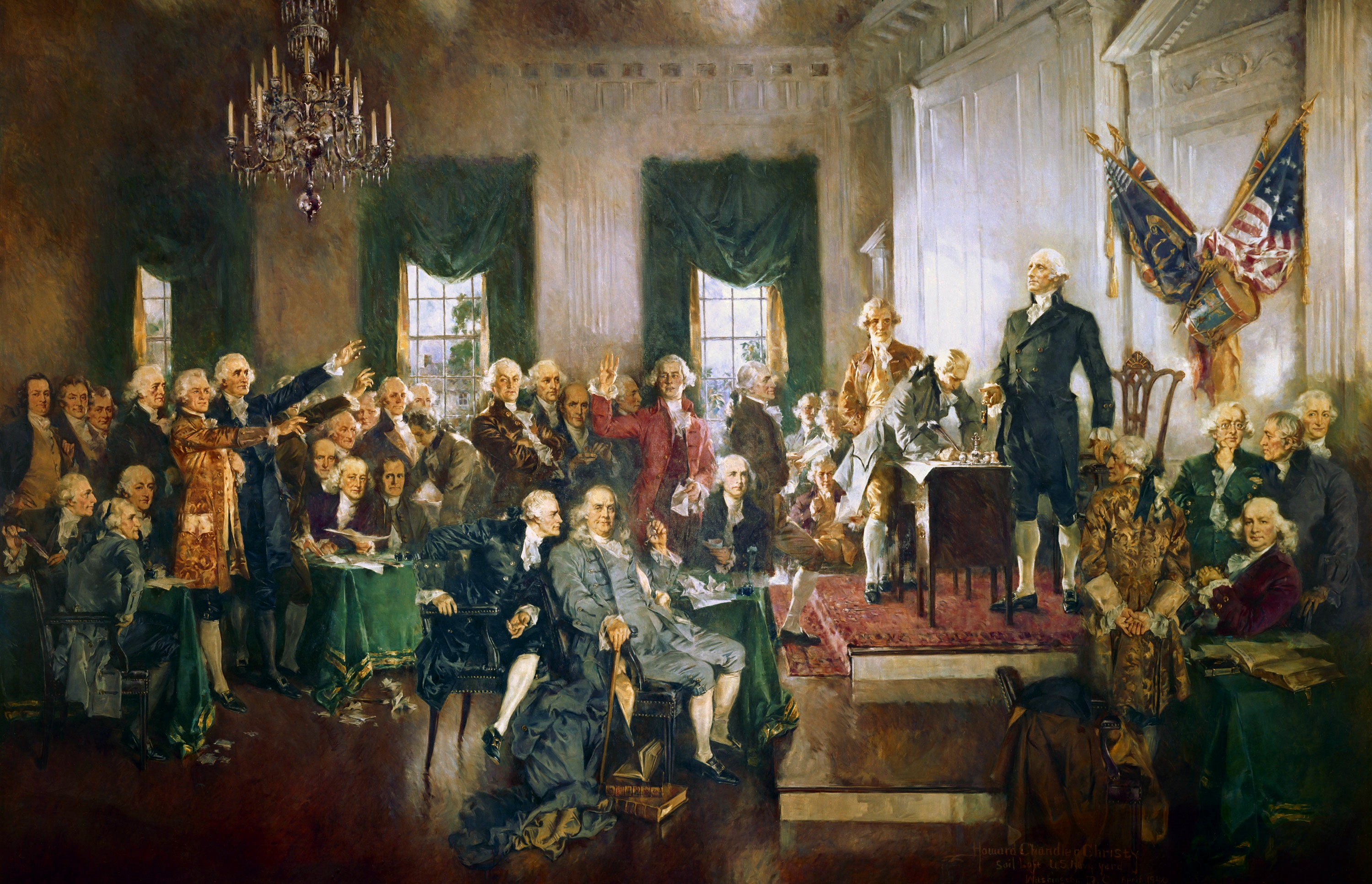
example of a less centralized system in the U.S. 

Saturday, August 15, 2015

How are missionaries like soldiers?

Adam Smith argued that a standing army (full-time soldiers) was much better than a militia (townspeople that are ready to grab their guns or pitchforks occasionally).
"The soldiers who are bound to obey their officer only once a week or once a month, and who are at all other times at liberty to manage their own affairs their own way, without being in any respect accountable to him. . ., can never have the same disposition to ready obedience, with those whose whole life and conduct are every day directed by him, and who every day even rise and go to bed, or at least retire to their quarters, according to his orders. In what is called discipline, or in the habit of ready obedience, a militia must always be still more inferior to a standing army."

He then proceeds to give several examples of countries that were successful because of their standing armies.

I will compare militia to faithful people who are not full-time missionaries, and will compare full-time missionaries to a standing army.

During the mission that I served in Guatemala, I learned about the importance of obedience, as do most missionaries, I imagine.

While I believe we should always strive to obey God and the leaders He calls, soldier-like obedience happens more during full-time mission service than during common life.

All missionaries have a mission president who has been called of God and cares about all the people living within their mission's boundaries.

The missionaries have decided to literally lose themselves (like when I would get to a new Guatemalan village without addresses) in the service of others, and so their decisions are not just impacting themselves, but the salvation of others. It also seems that small things that missionaries do have a large impact on the culture that incoming missionaries fall into. For these reasons, it seemed especially necessary to the success of the mission that we be ready to change our behavior according to the guidance that we received from our mission president.

Non-missionaries are like militia who can do a great variety of good things in their families and professions. Full-time missionaries are comparable to the standing armies that Adam Smith mentioned; they are specialized in moving forward a battle against things that stop the Gospel of Jesus Christ from moving forward (laziness, apathy, addictions, etc.). I saw on my mission that persistence on our part to incorporate counsel from our mission president led to great progress.


I suppose that as 'militia', we want to do everything we can to have the same quality and spirit that 'standing armies' achieve through their ready obedience, while striving to help our families and obtain secular education. I am impressed by and try to emulate the simple obedience that I see in the missionaries around where I live.
There are great blessings to be had by gaining a testimony of whether our leaders are called of God and then obeying their inspired counsel with a cheerful heart.

Perhaps this idea will help metaphors with soldiers to make more sense (2 Timothy 2:3). Yay for sharing the Gospel! : )

Sunday, August 9, 2015

Local Government

Given our limited state, the further things are the harder they are to manage. Adam Smith credited the success of Great Britain's North American colonies to the "liberty to manage their own affairs their own way."
Countries that imposed policies that were both outdated and not fit to local circumstances saw less success in their colonies.

On a personal level, we see that we typically know our individual circumstances better than any other mortal. "Every individual, it is evident, can, in his local situation, judge much better than any statesman or lawgiver can do for him." IV.2.10
Of course, large organizations have their purpose, but it can be easy to forget the importance knowing our immediate circumstances.

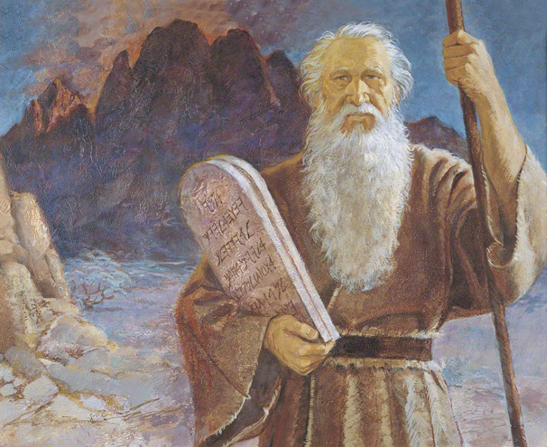
Like many, I find change and decisions to be more difficult than a completely preset plan. But since individuals and situations vary, we sometimes need more specific guidance from God than what we find in the ten commandments, as wonderful as they are. "The personal line [of communication with the Lord] is of paramount importance in personal decisions and in the governance of the family" (Elder Dallin H. Oaks).
A mother kneels down with her son on her lap and wraps her arms around him while they both bow their heads and pray in a living room.
Once I was deciding who to become friends with. There were some people that didn't share my standards. Of course, we should choose our friends carefully since they have a large effect on us, but also not be overly exclusive. So I needed some guidance for my personal circumstances. I sought revelation from God through prayer, study, and talking to people who wanted the best for me and decided to keep on being friends with these people while also choosing to be in good places. I was then blessed to learn a lot with my friends.
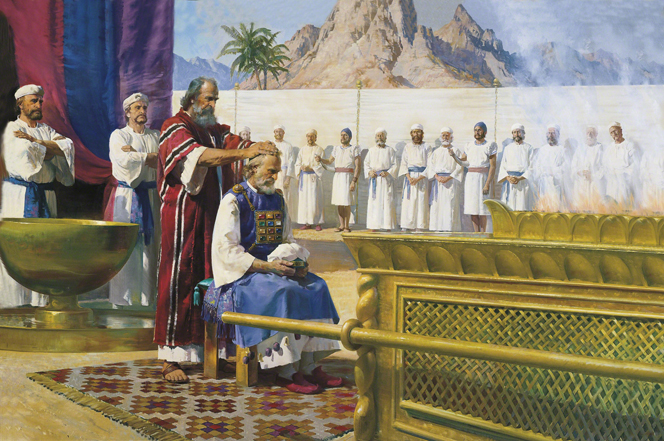
A painting by Jerry Harston of Moses with a long white beard, holding a staff and two stone tablets.A painting by Harry Anderson showing Moses with his hands on Aaron’s head inside of the tabernacle.
We have the Book of Mormon because the Lord sent prophets to the Americas, even though the Lord already had prophets in Jerusalem. "For I command all men, both in the east and in the west. . . and in the islands of the sea, that they shall write the words which I speak unto them" (2 Nephi 29:11).

Similar to how it was difficult for European countries to run the economies of their colonies, I imagine it would be difficult for one man to run God's entire kingdom on Earth by himself; this is what Moses learned when his father-in-law counseled him to delegate (Exodus 18), or split up some duties. The Church of Jesus Christ of Latter-day Saints follows that principle today.
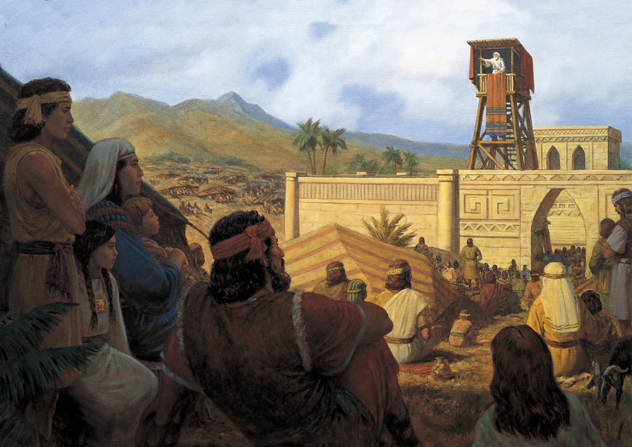
A painting by Gary L. Kapp depicting King Benjamin standing on a tower within a temple complex, speaking to the Nephites gathered around.
One last example of our need for customized direction is that "the living prophet is more important to us than a dead prophet" (President Ezra Taft Benson). The living prophet is a "watchman upon the tower" (Ezekiel 33) that warns us of nearby dangers like drugs and pornography before most people have realized how harmful they are. The Lord has called President Thomas S. Monson and other Apostles to guide the Church of Jesus Christ of Latter-day Saints today. I love all of the Apostles of Jesus Christ and am grateful for them!

I am also grateful for the personal revelation that I can receive by praying to Heavenly Father. When I do so, I can feel that I truly am His child (Romans 8:16).


Sunday, August 2, 2015

Slavery

Together with moral injustice towards the slaves, slavery might not have been very efficient (perhaps the two ideas are connected?)

In Adam Smith's 1776 The Wealth of Nations he explains that it is usually cheaper to hire labor than to own slaves, because the employer has to keep the worker alive either way, and a free man will manage his own living costs more efficiently than overseers would manage the slave's living costs. "Under such different management, the same purpose must require very different degrees of expence to execute it. It appears, accordingly, from the experience of all ages and nations, I believe, that the work done by freemen comes cheaper in the end than that performed by slaves."
Thus, his explanation for why slavery ever happened was

"the love of domination and authority and the pleasure men take in having every thing done by their express orders, rather than to condescend to bargain and treat with those whom they look upon as their inferiors and are inclined to use in a haughty way; this love of domination and tyrannizing, I say, will make it impossible for the slaves in a free country ever to recover their liberty." And we have seen that true liberty certainly wasn't achieved right after legal emancipation!

I believe that Adam Smith had some reason with these ideas, because they seem to be in harmony with God's desire for us to be free and overcome our tendency towards unrighteous dominion. (Doctrine and Covenants 121:39)
John Taylor (president of the Church of Jesus Christ of Latter-day Saints 1880-1887) said "I was not born a slave! I cannot, will not be a slave. I would not be slave to God! I'd be His servant, friend, His son. I'd go at His behest; but would not be His slave. I'd rather be extinct than be a slave. His friend I feel I am, and He is mine:-a slave! The manacles would pierce my very bones-the clanking chains would grate upon my soul-a poor, lost, servile, crawling wretch to lick the dust and fawn and smile upon the thing who gave the lash! . . . But stop! I'm God's free man: I will not, cannot be a slave!"

I am so grateful to be free to follow God by my own choice! I believe that exercising faith and choosing to follow Him can be a great source of peace and joy. And as we achieve this joy, God is efficiently achieving His purpose for us (2 Nephi 2:25, Moses 1:39).